
Sciatica vs. Disc Herniation vs Stenosis: What’s the Difference?
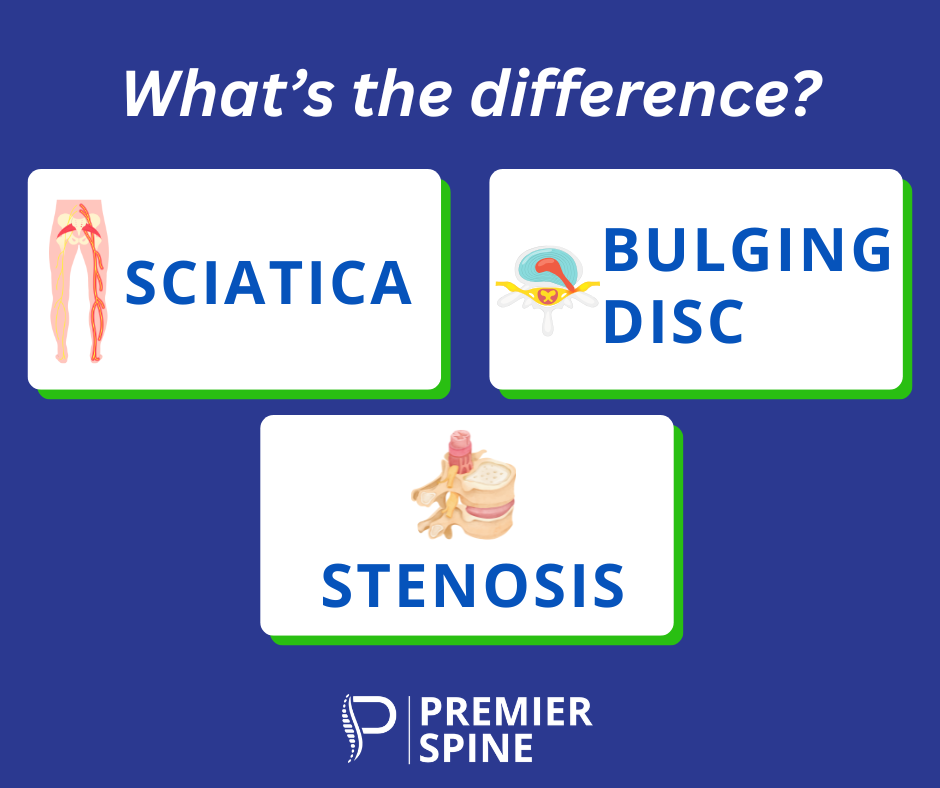
Back or leg pain can be confusing. Many people hear words like sciatica, disc herniation, stenosis and aren’t sure what they mean.
This guide breaks it down in a simple way so you can better understand your pain.
Why Do These Get Mixed Up?
These problems all involve the spine and nerves. They can cause similar symptoms like pain, numbness, or weakness.
But they are not the same thing.
Knowing the difference helps you get the right treatment.
What Is Sciatica?
Sciatica is a symptom, not a diagnosis.
It means pain that travels:
From the low back
Through the buttock
Down the leg
Sciatic pain often feels:
Sharp or burning
Like an electric shock
Sciatica happens when the sciatic nerve is irritated. Many spine problems can cause it.
What Is a Disc Herniation?
A disc herniation (aka bulging disc) happens when a spinal disc bulges or tears.
The disc can press on a nerve and cause pain.
Common signs include:
Back or neck pain
Pain down the arm or leg
Tingling or numbness
Muscle weakness
A disc herniation is a common cause of sciatica.
What Is Spinal Stenosis?
Spinal stenosis means the space inside the spine becomes too narrow.
This narrowing puts pressure on the nerves.
Stenosis often develops over time.
Common symptoms include:
Back or neck pain
Leg pain with walking or standing
Numbness or weakness
Relief when sitting or leaning forward
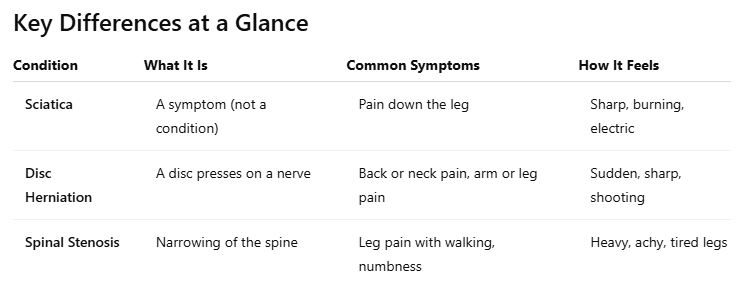
Key Differences at a Glance
How Are These Diagnosed?
A spine specialist will:
Listen to your symptoms
Perform a physical exam
Order imaging like an x-ray, MRI, CT scan or nerve conduction study if needed
The goal is to find the true cause of your pain.
Treatment Options
Most patients improve without surgery.
Common treatments include:
Physical therapy
Medications
Activity changes
Surgery may be considered if:
Pain does not improve
Weakness gets worse
Daily life is limited
When to See a Spine Specialist at Premier Spine
If back, leg, neck, or arm pain is stopping you from living your life, it’s time to get answers.
At Premier Spine, we specialize in diagnosing conditions like spinal stenosis, disc herniation, and sciatica. We focus on finding the cause of your pain and guiding you to the right treatment.
Why Choose Premier Spine?
Board-certified spine specialists
Advanced imaging and diagnosis
Personalized non-surgical and surgical care
Clear answers and compassionate support
Schedule a consultation with Premier Spine today and take the first step toward lasting relief.
Frequently Asked Questions (FAQ)
Is sciatica the same as a herniated disc?
No. Sciatica is a type of pain. A herniated disc is one possible cause of sciatica.
Can spinal stenosis cause sciatica?
Yes. Spinal stenosis can press on nerves and cause leg pain that feels like sciatica.
Do these conditions always need surgery?
No. Most people feel better with non-surgical care like physical therapy, medication, or injections.
How do I know which one I have?
A spine specialist can help. Your symptoms, exam, and imaging help find the true cause.
When should I see a spine specialist?
If pain, numbness, or weakness lasts more than a few weeks—or is getting worse—it’s time to be evaluated.
Final Thoughts
Spine pain can be confusing, but it doesn’t have to be.
Understanding what’s causing your pain is the first step to feeling better.
With the right diagnosis and care, relief is possible.
